
After severe weather, storm damage roof repair often begins with identifying what changed on the roof and inside the property. Some problems are obvious immediately, while others remain hidden until another period of rain exposes a vulnerable area.
Strong wind, heavy rain, and wind-driven debris can lift shingles, crack or shift tiles, damage flashing, affect roof penetrations, and create drainage problems on flat or low-slope roofing systems.
Knowing the warning signs can help South Florida property owners decide when a safe visual check is enough and when professional roofing services, temporary protection, or a professional roof inspection may be needed.
QUICK POST-STORM CHECK
Warning Signs to Look for After a Storm
- Missing, lifted, or displaced roofing materials
- Cracked or shifted roof tiles
- New ceiling stains or active leaks
- Damaged flashing or roof penetrations
- Debris impact or visible punctures
- Standing water on flat roof areas
Why Roof Damage After a Storm Should Not Be Ignored
Storm damage does not have to look dramatic to become a serious roofing problem. A displaced tile, lifted shingle, damaged section of flashing, or compromised roof penetration may create an opening for water during the next rainfall.
Once moisture moves beyond the exterior roofing system, the problem can begin affecting decking, insulation, ceilings, walls, and interior finishes. In South Florida, where another period of heavy rain may follow quickly, identifying damage early can help keep a localized problem from becoming a larger repair.
Early evaluation also helps determine whether the property needs a targeted repair, temporary protection, leak detection, or a broader roofing solution.
Common Signs of Roof Damage After a Storm
Some signs of roof damage after a storm can be seen from the ground. Others first appear inside the property. The most important thing is to notice changes that were not present before the weather event.
- Missing, lifted, cracked, or displaced roofing materials
- Broken or shifted roof tiles
- Loose ridge caps or roof-edge materials
- Bent, damaged, or separated flashing
- New ceiling stains or interior water marks
- Damp insulation or attic moisture
- Debris impact marks or punctures
- Standing water on flat or low-slope roof areas
Not every warning sign means the entire roof has failed. The objective is to recognize that something has changed and determine whether a closer evaluation is appropriate.
– Missing, Lifted, Cracked, or Displaced Roofing Materials
Wind can expose weak points in a roofing system. On asphalt shingle roofs, look for missing shingles, lifted edges, torn sections, or areas where the roof pattern suddenly appears different.
Tile roofs may show cracked, broken, shifted, or missing pieces. Even when a tile remains in place, movement can expose underlying components that help manage water beneath the finished roof surface.
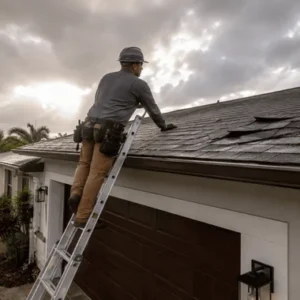
Perform this initial check from the ground or another safe location. A wet or storm-damaged roof should not be treated as a safe walking surface.
– Check Flashing, Roof Edges, and Penetrations
Some of the most vulnerable roofing areas are transitions between different materials and surfaces. Flashing around walls, valleys, vents, roof edges, and other transitions can be bent, loosened, or displaced by strong wind and debris.
Roof penetrations such as plumbing vents, exhaust vents, skylights, equipment penetrations, and other openings also deserve attention after severe weather. A roof may appear largely intact while water is entering through a relatively small damaged transition.
– Look for New Water Stains or Interior Moisture
Sometimes the first evidence of storm damage appears inside the property rather than on the roof. Check ceilings, upper walls, attic spaces, and areas beneath known roof penetrations for conditions that were not present before the storm.
New ceiling stains, damp drywall, moist insulation, bubbling paint, musty odors, or active dripping during rainfall can all indicate that water is entering somewhere in the roofing or building system.
The location of an interior stain does not necessarily identify the exact entry point. Water can travel along decking, framing, pipes, or other components before it becomes visible indoors, which is why professional leak detection may be useful when the source is unclear.
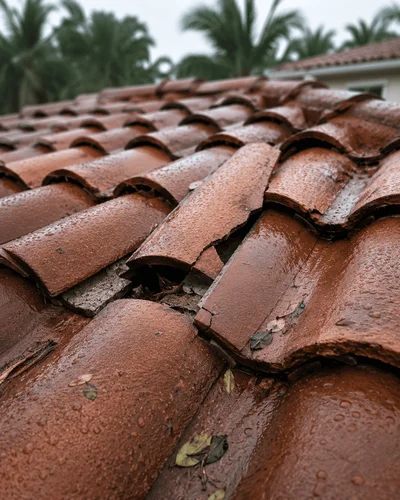
– What Storm Damage Can Look Like on a Tile Roof
Not all storm damage is dramatic or easy to identify from the ground. On tile roofing systems, strong wind and impact can crack, shift, or displace individual tiles and expose vulnerable areas beneath the surface.
Even when the damage appears minor, the affected area may become vulnerable during the next period of heavy rain. If one section of the roof looks different after a storm, a professional inspection can help determine whether the issue is isolated or part of a larger roofing problem.
Other Storm Damage Signs Worth Checking
Some roofing problems deserve additional attention even when they are not the first signs a property owner notices. These conditions can help explain what happened during the storm and whether a closer inspection is warranted.
Branches, palm fronds, loose outdoor materials, and other wind-driven debris can strike shingles, tiles, flashing, roof vents, membranes, gutters, and roof edges. Larger impacts may be obvious, while smaller damage can be difficult to identify from the ground.
If a heavy object has struck the roof, do not attempt to remove major debris from a visibly damaged area yourself. The affected roofing or underlying components may need professional evaluation first.
Asphalt shingles contain protective surface granules. After severe wind or impact, an unusual amount of granules near downspouts or around the property may indicate that part of the roofing surface was affected.
Some granule loss occurs naturally as shingles age, so the important question after a storm is whether there is a noticeable change compared with the roof’s previous condition.
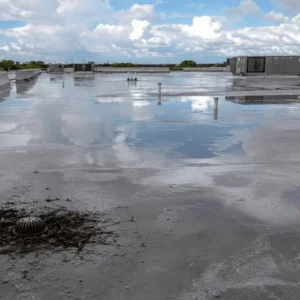
Flat and low-slope roofing systems depend heavily on proper drainage. After intense rainfall, blocked drains, debris around scuppers, disturbed membrane areas, or existing drainage problems can leave water standing on sections of the roof.
Avoid walking across a wet flat roof after a storm. Wet roofing surfaces can be slippery, and damaged areas may not be safe to access without proper evaluation.
What to Do If You Suspect Storm Damage
If you notice a possible problem, the next steps should focus on safety, documentation, and limiting additional water intrusion until the condition of the roof is understood.
1. Start With a Safe Visual Inspection
Inspect the roof and surrounding property from the ground or another safe location. Do not climb onto a wet, damaged, or debris-covered roof.
2. Check the Interior
Look at ceilings, upper walls, attic spaces, and areas beneath known roof penetrations. If water is actively entering, move vulnerable belongings away from the affected area when it is safe to do so.
3. Document Visible Changes
Photograph visible roofing damage, fallen debris, water stains, active leaks, and affected interior areas. A simple record of the condition can help when discussing the scope of work with a roofing professional.
4. Avoid Unsafe DIY Roof Repairs
Temporary protection can be useful when a roof has been opened by a storm, but safely installing it requires appropriate access and secure placement. Climbing onto a damaged or wet roof immediately after severe weather can create unnecessary risk.
5. Schedule a Professional Roof Inspection
A professional roof inspection after a storm can help identify visible and less obvious problems, evaluate affected roofing components, and determine whether repair, temporary protection, leak detection, or a broader roofing solution is appropriate.
EMERGENCY ROOFING
Is your roof leaking after a storm?
SWC Builders provides emergency roofing support, leak detection, emergency tarps, inspections, and roof repairs to help protect your property after severe weather.
REQUEST ROOFING SERVICEWhen Immediate Roof Protection May Be Needed
Some storm damage cannot wait for a permanent repair. Missing materials, debris impact, exposed sections, or active water intrusion may require temporary protection while the roof is evaluated and the permanent scope of work is determined.
An Emergency Tarp Is Temporary Protection
An emergency tarp can help limit additional exposure to rain when installed correctly. It should be treated as temporary protection rather than a substitute for repairing the damaged roofing system.
SWC Builders offers emergency tarp services and emergency roofing repairs when storm-related conditions require immediate protection.
Is the Leak Really Coming From the Roof?
Water appearing on a ceiling after a storm naturally raises concerns about the roof, but the visible location of moisture does not always reveal the exact entry point.
Roof leaks may originate around damaged roofing materials, flashing, penetrations, seams, or other components. In some situations, water-related problems may also involve plumbing rather than the roofing system itself.
Professional leak detection helps narrow down the source before corrective work begins, reducing the risk of treating the wrong area while the actual problem remains unresolved.
Storm Damage Roof Repair or Roof Replacement: How Do You Know?
Finding storm damage does not automatically mean the entire roof needs to be replaced. A localized issue may be suitable for storm damage roof repair when the surrounding roofing system remains in serviceable condition, while more extensive damage may require a broader solution.
A professional evaluation should consider the actual condition of the roofing system rather than assuming that every storm requires replacement—or that every problem can be solved with another patch.
If the evaluation points to a full roof replacement, homeowners can compare the best roofing shingles for Florida with tile and metal roofing before choosing the new system.
| Factor | What a Professional Evaluation Considers |
|---|---|
| Extent of damage | Whether the affected area is localized or visible across multiple sections of the roof. |
| Condition of surrounding materials | Whether nearby roofing components remain in serviceable condition. |
| Leak and repair history | Whether the issue appears isolated or is part of a recurring pattern. |
| Roof components | Whether flashing, penetrations, drainage, or underlying components have also been affected. |
| Watertight performance | Whether a targeted repair can reasonably restore the affected area or a broader roofing scope should be evaluated. |
SWC Builders’ roofing and waterproofing services include repairs, reroofing, roof replacement, maintenance, leak detection, and residential and commercial roofing solutions.
Why a Professional Post-Storm Inspection Matters
A ground-level check can reveal obvious damage, but some roofing problems require closer evaluation. A professional inspection can review critical components and determine what should happen next.
- Roofing materials
- Flashing and roof edges
- Penetrations and transitions
- Previous repair areas
- Drainage components
- Signs of water intrusion
- Debris or wind-affected areas
- Overall condition of the affected system
Depending on the findings, the next step may involve monitoring an area, completing a targeted repair, installing temporary protection, performing additional leak detection, or planning a larger roofing scope.
How SWC Builders Can Help After Storm Damage
SWC Builders provides residential and commercial roofing support for properties across Florida, including services that may be needed after severe weather.
Emergency Support
- Emergency roof repairs
- Emergency tarp installation
- Leak detection
Inspection & Evaluation
- Roof inspections
- Roofing-related letters and documentation
- Estimates
Roofing Solutions
- Targeted roof repairs
- Reroofing and roof replacement
- Waterproofing and related roofing solutions
SWC Builders also has direct project experience restoring roofing on hurricane-damaged properties, including a completed reroofing project in Miami Gardens.
The appropriate solution depends on the actual condition of the roof, which is why inspection and evaluation should come before deciding on the final scope.
Prepare for the Next Storm
Once current damage has been addressed, the next objective is reducing vulnerabilities before another severe weather event arrives.
Roof maintenance can help identify loose materials, aging sealants, drainage concerns, flashing problems, and other conditions before the next period of heavy rain and wind. For a preventive walkthrough, see our Storm Season Roof Checklist for South Florida Homeowners.
That guide focuses on what homeowners should review before severe weather, while this article focuses on recognizing and responding to possible roof damage after a storm.
Frequently Asked Questions About Storm-Damaged Roofs
Can a roof be damaged after a storm without leaking?
Yes. Lifted or displaced roofing materials, damaged flashing, affected penetrations, or impact damage may exist before a visible interior leak appears. If the roof looks different after severe weather, a professional inspection can help evaluate the affected area.
Does storm damage always mean roof replacement?
No. Some localized storm damage may be repairable when the surrounding roofing system remains in serviceable condition. The appropriate scope depends on the extent of the damage and the condition of the affected roofing components.
When might an emergency roof tarp be needed?
A temporary tarp may be appropriate when storm damage leaves roofing materials missing, an area exposed, or water actively entering the property. A tarp provides temporary protection while the roof is evaluated and a permanent repair is planned.
Final Thoughts
After a storm, do not assume that a roof is fine simply because there is no dramatic visible damage. Displaced materials, damaged flashing, small openings, drainage problems, or early water intrusion can become more serious when the roof is exposed to additional rainfall.
Start with a safe visual check from the ground, look inside the property for signs of moisture, and document anything that appears different. If you notice active leaks, displaced materials, impact damage, or other warning signs, have the roofing system professionally evaluated.
Early evaluation can provide a clearer understanding of the problem and help determine the right next step before the next South Florida storm puts the roof under pressure again.